
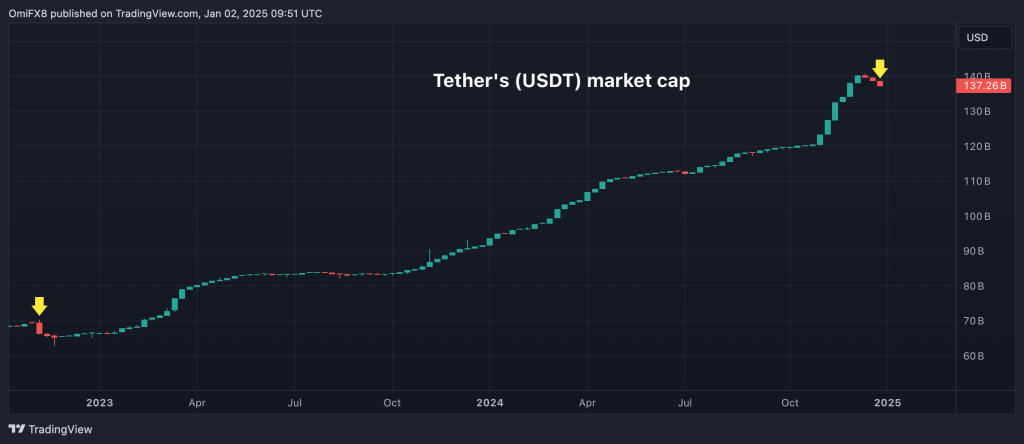
Tether’s Market Value Sees Sharpest Decline Since FTX Crash as MiCA Kicks In
Tether’s market cap has declined by over 1% this week, the steepest drop since the crash of FTX in November 2022.
Tether’s market cap has declined by over 1% this week, the steepest drop since the crash of FTX in November 2022.

South Korean trading volumes supported an outperformance in XRP, as a CoinDesk analysis noted earlier this week.

Macroeconomic concerns and rampant profit-taking are weighing on the crypto market as the year comes to an end.

AI agents are “revolutionizing markets by blending insights with community strategies, creating a smarter, more inclusive trading ecosystem,” says one analyst.

A stronger dollar historically tends to make dollar-denominated assets like bitcoin and gold expensive, leading to weakened demand in the short term.

High volatility can be good for option buyers because it increases the chance that the option will be “in-the-money” (profitable) at some point before expiry — creating profit for buyers.

Investment advisers, the gatekeepers to retail and high-net-worth capital, are seen overtaking hedge fund managers in owning BTC and ETH ETFs next year.
The purchase did little to buoy sentiment for bitcoin, which recorded its first seven-day loss since early November.

Memecoins are known for their high volatility and tend to outperform major tokens during price rallies, serving as a leveraged bet
Hashnote’s USYC is the primary backing asset of the red-hot decentralized finance protocol Usual, whose USD0 stablecoin zoomed over $1 billion market capitalization in a few months.